Appendix A: Site Assessment & Selection Summary
Introduction
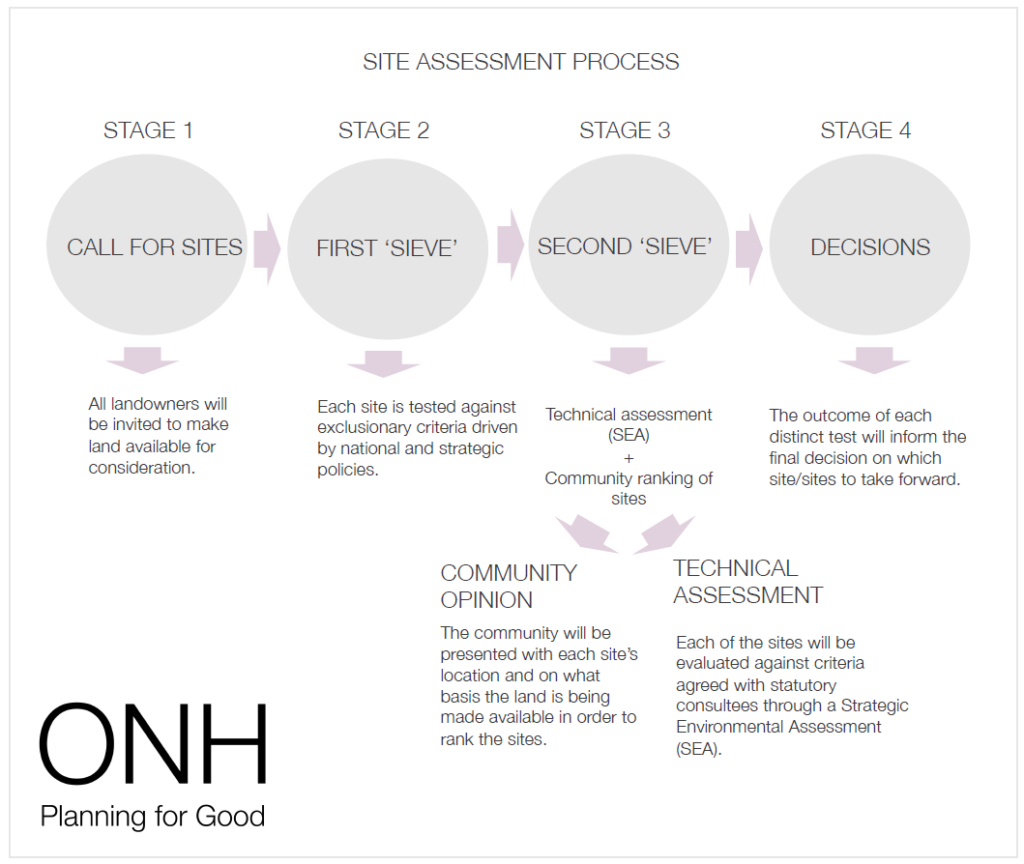
- This note summarises the process adopted by the Town Council in assessing and selecting sites for allocation in the Swanage Neighbourhood Plan (SNP), and its integration with the parallel Strategic Environmental Assessment (SEA) process (see schematic below).
Site Assessment
- The assessment process began at Stage 2 in spring 2023 and comprised firstly using the 2022 SHLAA output from Dorset Council to generate a long list of potential sites in the neighbourhood area. The project team assessed the sites individually and in spatial combinations, and the list went through a number of iterations over the next couple of years before the next Dorset Council SHLAA became available in autumn 2025.
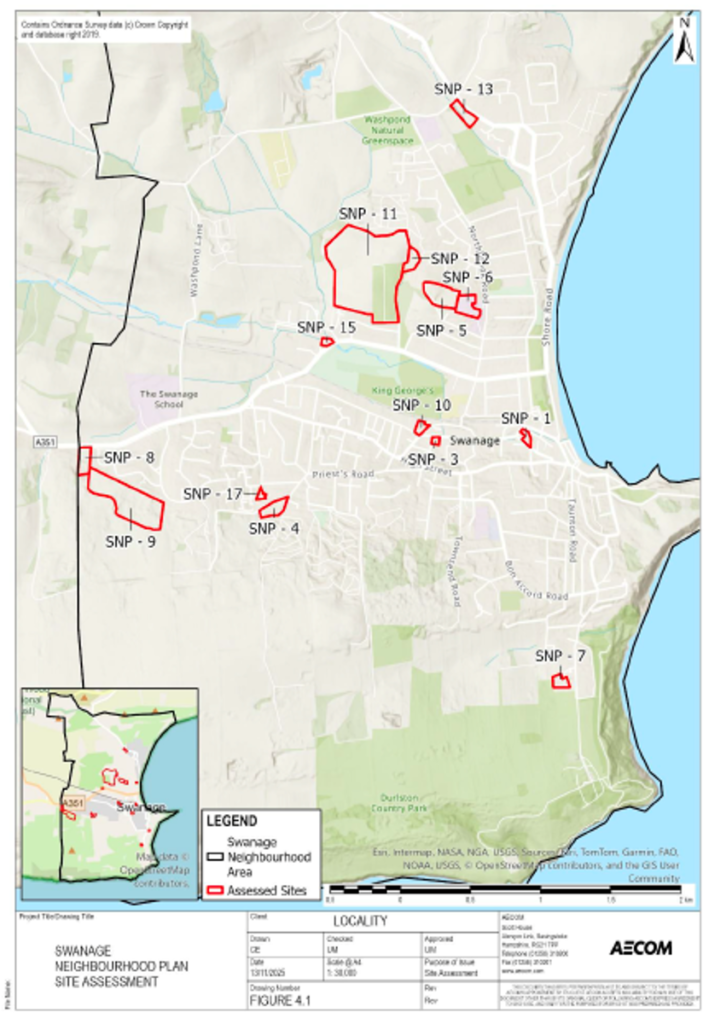
- The new list of 15 sites was produced used the past data and some of the new SHLAA sites (see §5 below) and was sent to consultants AECOM to carry out a ‘site options assessment’ (SOA) as the precursor to the SEA in Stage 3 (see Plan A).
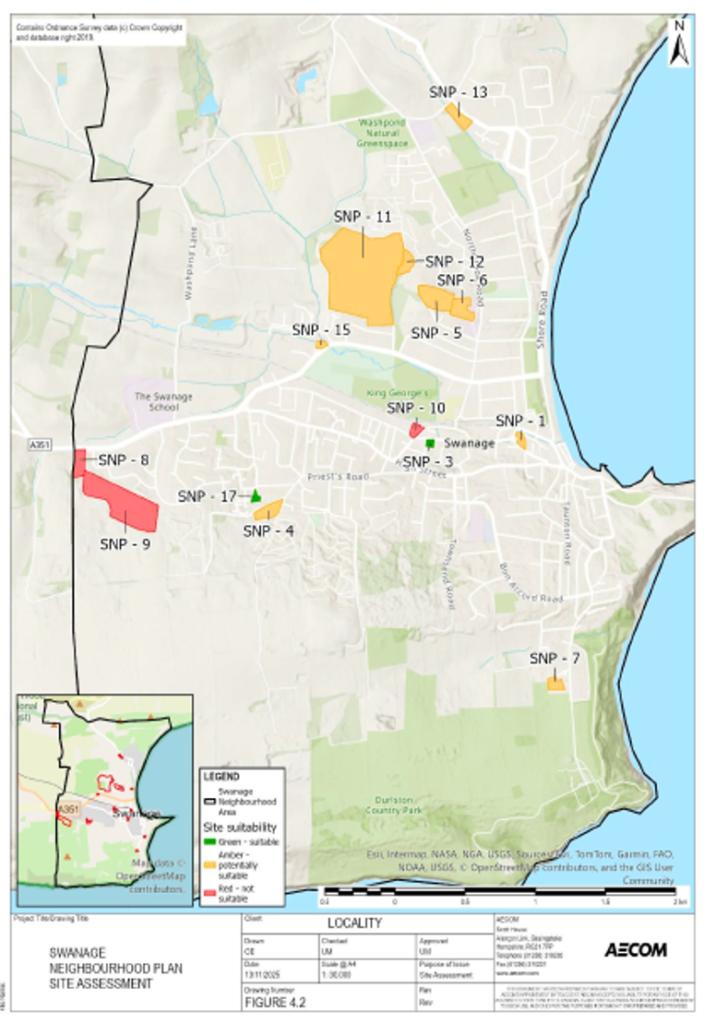
- The SOA report concluded that three of the sites were not suitable and two were suitable, with the others potentially suitable (see Plan B). In response the project team corrected an error in the SOA in relation to Site 10 which had the effect of making it suitable. It also noted that the Site 11 boundary incorrectly included the Prospect Allotments, the development potential of which was identified in the Swanage Local Plan, but the Town Council no longer wished to take that idea forward.
- It also agreed that Site 12 and three other sites outside the settlement boundary that were included in the separate Dorset Local Plan site assessment list would not be assessed for the neighbourhood plan. The sites were considered either unavailable or subject to unmitigable constraints (i.e. a designated village green) but if Dorset Council wished to assess them further through its Local Plan, then it could do so.
- As Dorset Council chose to carry out its own (‘Regulation 18’) consultation exercise on site allocation options across the county in autumn 2025, the Town Council abandoned its Stage 3 plans to carry out an engagement exercise on the sites for fear of confusion. Instead it consulted the community on more general vision, objectives and policy matters once the Dorset Council period had ended.
Site Selection
- The Stage 4 site selection process comprised the blending of the community engagement and technical (SOA) outcomes. In the light of draft national planning policy changes (in the December 2025 consultation version of the ‘National Planning Policy Framework’ (NPPF)) the project team decided to distinguish between sites located inside and outside the settlement boundary. Of the sites inside, it decided that those located in residential areas that did not have an established community use would not require a site allocation policy as national policy encouraged their development for housing (i.e. sites 4, 7, 15 and 17).
- Not surprisingly, in reviewing the alternatives and then the allocation policy (SWAN3) it noted the potential for negative landscape and heritage effects of some sites, notably those outside the settlement boundary, and some positive community wellbeing effects. It concludes that the sites proposed for allocation in Policy SWAN3 will not have significant negative effects with the respective design-based mitigation measures in place.
- Sites 1 and 10 have established commercial uses requiring an allocation policy supporting their change of use to a mix of new commercial and residential uses. Sites 3, 5 and 6 have established community uses also requiring an allocation Policy supporting their change of use to a mix of new residential and/or community and open space uses. Sites 11 and 13 lie outside but adjoin the current settlement boundary. The SOA considers both may be suitable with the appropriate mitigation measures. In the light of its primary objective to maximise the delivery of permanent residence and genuinely affordable (community-led) housing, the Town Council considered both sites should be allocated.
- Given Site 11 is of a scale (170 homes) to be defined as ‘major development in a National Landscape’ the Town Council must demonstrate the public benefits of the allocation outweigh the landscape harm that cannot be moderated (per NPPF §190). It has therefore required all of the affordable home component that is necessary to comply with the adopted Purbeck Local Plan (70 homes) to be delivered as community-led development (per the NPPF Glossary). The same provision is not required of Site 13 as it would not be defined as major development, although it too is being promoted as a community-led development.
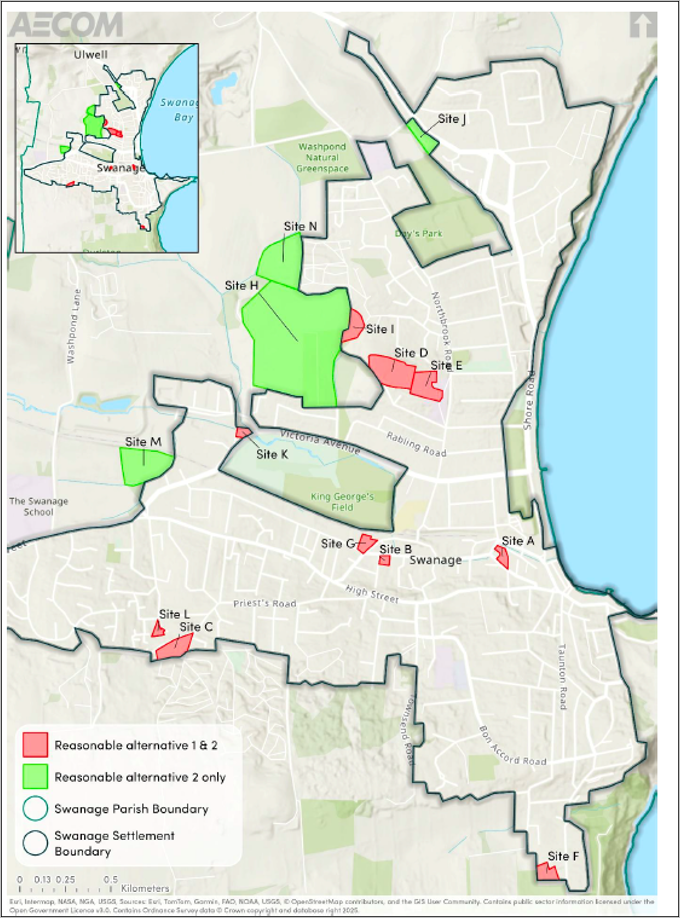
- The site assessment and selection process resulted in 7 sites being proposed for allocation – 1, 3, 5, 6, 10, 11 and 13. Draft allocation policies were prepared and assessed by AECOM as part of its SEA work (see the separate report), including comparison with some sites not taken forward that it considered ‘reasonable alternatives’ (see Plan C below).
- Not surprisingly, in reviewing the alternatives and then the allocation policy(SWAN3) it noted the potential for negative landscape and heritage effects of some sites, notably those outside the settlement boundary, and some positive community wellbeing effects. It concludes that the sites proposed for allocation in Policy SWAN3 will not have significant negative effects with the respective design-based mitigation measures in place.